Special Newsletter: Coronavirus Pandemic

(Our regular spring issue is ready to go but will be sent out in May)

BY: NORMAN WETTERAU, M.D. - FMHF PRESIDENT

An issue of Wholeperson Health Care was ready to go out in March but as the epidemic spread, I waited. We will send the issue out soon and it will include information on our retreat planned for Sept 18-20, plus an article by Frank Ogdon, and one by Tim Kratzer.

What can we say about this epidemic? What do we say to our family, our friends, and our church? I have been asking God. For me, I have had a pretty easy life. I was drafted but not sent to Vietnam. I have had the same job in the same community and good health. I have had good Christian Friends and seen God work in our community and many lives.

On the other hand, I have been aware of disaster overseas, especially in Congo and problems in the US among the poor in our own community. My neighbor lost two children last year: one age 15 to a car accident and 6 months later his older brother who no longer lived at home, to a drug overdose. I visited my neighbor, prayed for many of these situations and contributed money, but was never in such a painful situation.

Some of you have been in even worse situations: riots, civil war, and overwhelming disease with little to do for the disease. Now we are not on a mission station that lacks supplies and treatment but in the US. We have no treatment except respirators but not enough. We do not have enough gowns. Some of our mission hospitals are chronically in that position.

Now everything has stopped. I am not sure what is more frightening, the disease, or the collapsing economy. Will people have food? Where will governments get the money for the relief that is needed? How long will this last?

We read Bible verses telling us that God is in control but still have anxiety. People look to us for treatment and assurance but we are also looking for assurance.

I am asking those who read this to send their thoughts to me so we can post them. I am asking us to pray for each other. Any crisis brings out the best and worst. Some drug addicts in treatment are relapsing but others from the streets now are coming in for help. Those in good marriages end up stronger but for others, the marriage will become worse. Email me your thoughts: normwetterau@aol.com and we might post some of them.


Christian Community Health Centers

This site has excellent summaries of how some of the urban health centers are addressing the coronavirus epidemic. Much of this is not in the regular press and is worth reading and praying about.

Lamenting and Rejoicing at the Same Time

Many of us receive Word and Deed e-mails from the medical group in Burundi. Eric McLaughlin, who spoke at our retreat in 2018 (see our Dec 2018 newsletter), wrote a recent post which I felt was very appropriate for this time in our nation. He has granted permission to reprint it here.

In addition, the book which he talked about publishing is now available at Amazon: Promises in the Dark: Walking with Those in Need Without Losing Heart

Those of us who attended the 2018 retreat will want to read more about the subject and those who were not able to attend should even more order it. This short piece from Word and Deed is a sample of the wisdom and vision God has given him. As we pray for our own country in this epidemic, pray also for Burundi, and the rest of Africa. This virus could be even more devastating there.


By: Eric McLaughlin, M.D.
Original Post

We are living in a time of loss.  And so are you, fellow inhabitant of planet Earth.  This season is not what anyone predicted.  We cannot go where we thought we could go.  We cannot do what we thought we were doing.  We cannot be with those whom we thought to spend time.  We do not know when things will change, which makes any significant planning nearly impossible.  Early February has this amazing nostalgia.  The glory of that ordinary life - we knew it not.  May we know it better when it returns.

Watching people all over the world grapple with this time of loss has shown me two seemingly contradictory responses:

First, there is an increased call for the importance of lament.  Articles such as NT Wright’s and different books (including my own) have been sources of resonance for a lot of people.  Lament is indeed a gift to us in times like our own.  We don’t have answers, and we don’t know yet when answers will be forthcoming.  Our normal means of decision-making and anxiety-mitigation have been stripped from us by the utterly unprecedented nature of the global COVID- 19 pandemic.  We don’t know what to do.

Here, lament gives us the words and even the emotional stance that we need.  We cry out to God.  We pour out our complaint.  We ask “How long?” as more than a rhetorical question.  We don’t understand, but can at least know to whom our complaint is rightly addressed.  We do better to take the ugliest thought to God than the most cleaned-up thought anywhere else.  “We don’t know what to do, but our eyes are on you.”  (2 Chronicles 20:12)

The second response is one of celebration and beauty.  As our normal life becomes restricted, and in many places slows down, there is a need to find some form of celebration.  People write notes to each other.  You may have seen more longtime friends on Zoom in the past couple of weeks than you have in years.  Yesterday, my wife walked through our house loudly singing Les Miserables tunes (“One day more!”) and the kids joined in.  The joy and the beauty are a defiance of the fear and the darkness, and this is as it should be.

I have loved watching the art and the music that Covid sequestration has already birthed.  My med school classmates are posting brilliant dual-piano pieces that they are playing together despite being a time zone apart.  Our team intern’s watercolors of a beautiful JRR Tolkien quote are circulating on social media.  I can’t remember when the beauty of American spring was so celebrated in photos.  The human creative spirit inside all of us, which is part of humanity’s role as image bearers of a creative God, has hardly ever been so evident.  We need this.

So we find that we need to lament this loss.  And we find that we need to fill the void of this loss with a celebration of beauty.  And it feels impossible to do both of these together.  Give me one or the other, and some kind of path is laid before me.  But both?  I can feel my feet sticking to the ground.

God's Eternal Plan

By: Tim Kratzer, M.D.

We live so much of our lives as those driven by circumstances and victims of misfortune. We have entered into that reality as we find ourselves dealing with this COVID-19 pandemic. We’re confined to our homes. Friends and loved ones have been hospitalized, and some have lost the battle with this unseen enemy. Our economy has been turned upside down. Jobs have been lost. Accumulated wealth is disappearing.

Early on during this period of social isolation, Connie and I were reading from John 2:13-22 where the cleansing of the temple is described. In other Gospels, this event is placed just before the week of the Passion of Christ. Here we see Jesus beginning his ministry as he sets matters straight with the spiritual leaders by cleansing the temple. So also Jesus steps into our lives, setting our priorities right.

Jesus came, the Word become flesh. Now he steps into the temple, to give witness to God’s eternal plan. The Jewish center for worship, prayer, instruction, and sacrifice had become a place of commerce. The sacred had been reduced to the secular. What did Jesus see? Money changers and the selling of livestock were crowding out those who had come to be in the presence of God.

What did Jesus do?

“Jesus made a whip from some ropes and chased (the merchants) out of the Temple. He drove out the sheep and the cattle, scattered the money changers’ coins over the floor, and turned over their tables. Then, going over to the people who sold doves, he told them, ‘Get these things out of here. Stop turning my Father’s house into a marketplace! ‘”
(John 2:15-16)

So what was God’s plan? The Jewish leaders questioned Jesus. “What are you doing? If God gave you authority to do this, show us a miraculous sign to prove it.” (John 2:18) Jesus replied by saying that if this temple were destroyed, he would raise it up in three days. The Pharisees did not understand as many people do not understand today, even our so-called spiritual leaders. He was speaking of his sacrificial death, resurrection, and eternal purpose.

But there was one Pharisee named Nicodemus who was beginning to understand. “’Rabbi,’ he said, ‘we all know that God has sent you to teach us. Your miraculous signs are evidence that God is with you.’” (John 3:2) John in his Gospel reports that many began to believe and trust. (John 2:23) They were being introduced to a God of love. “For this is how God loved the world: He gave his one and only Son, so that everyone who believes in him will not perish but have eternal life.” (John 3:16)

In this time of suffering and uncertainly, we put our faith in God who promises us eternal life. We die to self and are born again by the power of the Holy Spirit. What a blessing to be reminded of our eternal hope.

Will the Corona Virus Change America?

By: NORMAN WETTERAU, M.D. - FMHF PRESIDENT

At this point, everything seems negative: staying at home, worried that we or a family member might die from the virus, and the economic collapse that our nation seems to be entering into. This epidemic is uncovering some weaknesses and unaddressed problems in our land. Will we decide to address these? So far it appears we might. Both political parties are suddenly concerned with the uninsured, even those who were previously opposed to any expansion in our government health programs. We do not want the uninsured to stay at home, infect others, and then die, leaving children without parents or grandparents. Suddenly some who had opposed the expansion of government-subsidized health care are concerned.

Children are going to school at home, but many had no home computers or internet access at home. Suddenly large school districts are finding ways to correct this situation. This problem is no longer pushed under the rug.

Then there is the problem of the marginally employed, the waitresses, taxi drivers, and part-time store clerks who are out of work. Both political parties came together to provide money for some of these people. We are all concerned that they have shelter and food. More problematic are the homeless and undocumented workers who are now unemployed. The virus can easily spread through homeless shelters. When we are to shelter at home, what happens if we have no home? Every unsheltered person is a risk to others but these people are unsheltered due to the economic status and lack of a home. Some of these problems might be harder to address than the issue of health insurance or computer-based education for all, but still need to be addressed.

Another issue in our basic economic system is fine in good times but not for a crisis such as this one. Dr Stiglitz, a professor at Columbia University and 2001 recipient of the Nobel Prize in Economics wrote an opinion piece in the April Time magazine: Vol 195, No 14. He points out that markets can be shortsighted and risk-averse. Of course, the markets seemed to work wonderfully in the past few years, but their efficiency does not prepare us for a crisis. We needed to produce and store gowns and masks but how can one expect a company to produce things that they are not paid for and then store them for some emergency that may never come. There are things that a free economy is good for and things that the government needs to do. A totally free enterprise healthcare system has not prepared us for this and by itself, it cannot solve the problem. It appears that now people recognize this, but what about the next time? He compared what we have done to buying a car and saving money by leaving out a spare tire. Everything is fine and we have more room in the trunk until a flat tire occurs. Dr. Stiglitz writes: “We have been running our entire society without spare tires and proud of the seeming efficiency we’ve gained, and never prouder than in the health care sector.”

So we are responding to many of these challenges. It has been surprising how both political parties can agree. Let’s pray that this can continue. The real question is, once this epidemic is over will we remain concerned for those without insurance, the unemployed, the homeless, and the small businesses? Will we return to a very efficient private health care system that running without any spare tires?


For continued discussion, check out this article from the University of Michigan.

How to Protect People who are Homeless During Covid-19

2019 Retreat Summary

BY: NORMAN WETTERAU, M.D. - FMHF PRESIDENT

Serving God Through the Stages of our Lives
Stay plugged into the Powersource

Around 45 of us joined together with our speaker, Dr. Bill Morehouse, as we examined this topic by examining ourselves. One thinks of young people making important decisions and seeking God’s guidance but as long as God has left us on this earth, we need to continue to examine what we are doing and what God’s calling for us is. Our calling is also not just as a physician or nurse but as a Christian. We need to stay connected to God daily. Dr. Morehouse kept reminding us, not to just seek God's guidance and help but to stay plugged into the powersource through regular prayer. He kept repeating: “stay plugged in” and this requires regular times of prayer.

He provided specific advice for prayer taken from Bob Sorge’s Reset: 20 Ways to a Consistent Prayer Life. A handout on 20 ways to a consistent prayer life and additional materials and notes can be found on Dr. Morehouse’s website (scroll down to Free Methodist Healthcare Fellowship.) This list includes ways to escape distraction, the need to repent, cleanse, praying the scripture, and taking time to listen to God. He encouraged us to journal during our quiet time. The notes from the conference are posted on his website as well.

One of the best parts was dividing into groups that looked at medical practice as a mission, serving the poor, community outreach, mentoring students, and preparing for retirement. Small groups kept lists of ideas that were shared with the larger group. What was interesting was that many of the listed things did not just apply to our profession. We can serve the poor in many ways. We can mentor medical students but also youth in our church and family members.

Retirement is not the end but the beginning of another stage of our life. We do not finish but graduate into retirement. There are tasks to retirement including mentorship, passing the baton, investing in the extended family, and focusing on building His kingdom.

At the end of the weekend, some of us felt that we were just beginning. If we stay plugged into the powersource, God can do great things in our lives and we will not burn out or become exhausted.

FMHF Expands Its Vision

Serving God through Our Professional Lives

We had a wonderful retreat as we examined how we serve God throughout our professional lives. Our board also spent a half day looking at how our organization can give service to God by helping our churches minister more effectively to those who attend our churches. In addition to our newsletter and annual retreat, we discussed the possibility of putting on half or all day meetings at local churches or at our Free Methodist colleges. Subjects could include medical missions, ministering to the sick, Christian understanding of suffering and addictions. We thought that a church could sponsor this and invite other churches to join them, or a conference. The half or whole day could have one theme or several issues addressed although our organization would provide at least one speaker, local speakers could also be involved. For example: if the theme was addiction, Dr Wetterau might be a featured speaker but local substance abuse providers, school officials, and others might be involved. A day could also be set up with more than one theme and people might attend all or choose which ones that interested them. A lot is happening in our mission hospitals and this subject might interest people including Ebola, violence against women, and prevention of violence.

Colleges could sponsor similar meetings but some might want something on how to get into medical school, or do you really want to become a health professional? We did have representation from the Chaplain’s association and would like to have a closer relationship with medical chaplains. We are seeking a medical chaplain to join our board.

Anyone who has an interest in any of these areas can email normwetterau@aol.com with your interest and phone number. Organizing a conference may require more contact than a few emails.

Lament for Congo

By: NORMAN WETTERAU, M.D. - FMHF PRESIDENT

Missions, medical care, church growth, a Nobel peace prize, and now lament as there is renewed civil war. Several of our members including board member Tim Kratzer and former board member Linda Stryker were involved in the medical work in Congo in the 1980s.

Deaconess Nundu Hospital was established in the South Kivu Province of Eastern Congo and a system of rural health centers was developed. A nursing school was established to staff these clinics. Along with these medical facilities, numerous churches were planted and schools established.  It was a time to praise the Lord for the work there. Members of the Free Methodist Medical Fellowship, as it was known then, were involved in this medical work in the Congo as well as work in Rwanda, Burundi, Haiti, and other countries.

Now our time of praise has turned to mourning. In several of these countries civil war broke out. The war in Congo appears to be the longest and most deadly with over 5 million people dying since 1995. This is more people than in other well-known wars including Cambodia, Syria, and Rwanda. What is worse is that this war seems to go on and on, over 25 years now. Hundreds of thousands have also fled as refugees and some have been resettled in the US. Free Methodist Churches of Congolese refugees dot our nation and add vitality to the United States Free Methodist Church, but the praise and vitality of these churches belie the fact that war and conflict continue in the Democratic Republic of the Congo.

Civil unrest has persisted and accelerated in intensity over the past year on the plateau region west of Deaconess Nundu Hospital. This situation is very critical and the Free Methodist Church has been severely impacted. More than 80% of the villages where the FMC has churches have been destroyed. Hundreds of people have lost their lives. The conflict is ongoing with fighting reported around Minembwe, the principle town in the area. More than 35,000 have fled the area for Uvira to the north and Baraka to the south and even to neighboring countries. It is reported that 40,000 people are concentrated in Minembwe, posing a humanitarian crisis with lack of shelter, food and clothing. The Bishops Famine and Relief Fund has assisted these internally displaced people, but has not yet gotten to those who have fled to Minembwe. More assistance is needed.  

In November, several congregations in the Rochester, NY area gathered in a Lament for Congo Service. As doctors, we try to fix things and so we have been attempting to help through support of Deaconess Nundu Hospital.  Those that gathered in Rochester are encouraged by these efforts. Susan Uwiringiyimana, a Free Methodist who fled this region of the DRC almost twenty years ago, was also at that service. She works with displaced women in the Congo.  Dr. Wetterau represented Champions for Congo and the Free Methodist Healthcare Fellowship. But the service was about lament. We need to start with prayer and call on God to act. The various plans for peace, whether brokered by the UN, the government or even the Free Methodist Church have not worked. We need to cry out and this service was a time to do that. The service began with songs of praise to God by everyone and then by an African refugee choir. Following the singing there was a time of remembering the good things of the Congo, the establishment of the church in 1963 and the tremendous growth of the church. God has been and still is working there. God will do more.

There was then confession. One person from the Congo began to recite portions of Romans. I do what I do not want to do. I am against what is happening but then I do it. He went over and over that as a confessional and helping all to realize that there are Christians from different tribes who feel what is happing is terrible yet end up participating in it. How is that possible? Paul made it clear in Romans that it is possible and we need to confess and repent. We need to beg God to help us change and help the whole country to change. This confession then moved to general confession, repentance, and lament

Scriptures of lament were read including Psalm 90. The service ended with communion. Jesus died at the hands of men, but unlike the refugees who have lost their lives, he died for the sins of humankind, people from every nation. And he was resurrected as clear evidence that God has overcome evil. We ask God to come and walk with us but in communion we join with Jesus at the table of death, forgiveness, and healing.

Many of us have been trying to solve the problem through our giving of financial resources to provide medical care or to help refugees. We need to continue to give, but let us also fall on our knees, weep, and repent. As we join with the refugees in lament, God will guide us in the ways that we can join in assisting those who are suffering with both our prayers and gifts. Can those of us who are not from the Congo and are not refugees really appreciate how good our own situation is? Can we join with those who weep? As we do that God will visit us and walk with us.

The Gifts of Healing

By: Pastor Colleen Dick, Dansville Free Methodist Church

This is a sermon recently given by Pastor Colleen Dick at the Dansville Free Methodist Church. It was part of a series on the gifts of the spirit. It was powerful and has some emphasis that I am not used to hearing. Feel free to e mail responses to the editor: normwetterau@aol.com . Used with permission.

The Gifts of Healing
Acts 28:7-9

Divine compassion. Have you ever experienced divine compassion? Divine meaning “of or belonging to God” or “proceeding from God.” It is very different from the natural compassion or concern we may feel towards a person or group of people who are suffering. There are many organizations that strive to tug on our heartstrings in hopes that we will contribute money to those who are in dire need. Of course, we have all seen the commercials of the starving children in Africa whose bellies are swollen, and flies are buzzing around their heads. Some of you may be supporting a child in need in a poor foreign country. Our own Free Methodist Denomination offers this ministry through our International Child Care Ministry. This is a tremendous ministry to children all over the world, and there are a number of other Christian and secular organizations trying to help children in need as well. In America, we are very detached from the poor living conditions in which other human beings are trying to survive. So, to tug at our heartstrings, we are shown video images of starving and malnourished children. If these images don’t rouse compassion within us then something must be wrong with our hearts. I know that many of our parents and grandparents convinced us to finish our dinners with these images in mind.

But this compassion that we feel for starving children around the world is not the same as divine compassion. Now there are certainly people who have divine compassion for the malnourished children, and these same people are working tirelessly to change their horrific living conditions and holding their governments accountable for allowing their people to live in this manner. But most of us do not feel divine compassion for these children. We often are able to ease our conscience when we send them a $50 donation once a year.

But divine compassion is different. As I said before, it is compassion proceeding from God. It causes one to act. Divine compassion is the reason that God the Father was able to send his Son Jesus to die on the cross. Divine compassion is the reason why many of us are here in this church today. Divine compassion is being so moved by something that you feel it deep in your stomach. Now I ask you again, “Have you ever experienced divine compassion?”

Over the last four weeks, we have been studying the supernatural gifts of the Holy Spirit found in 1 Corinthians 12:4-11. I want to remind you that these gifts are available to all believers of Jesus Christ because once we confess our sins and ask Jesus to be our Savior and Lord, the Holy Spirit moves into our bodies and sets up residence there. This is the same Holy Spirit with the exact same power that raised Jesus from the dead. These gifts that he distributes are one of the benefits we have as believers, but they are not meant to benefit us as individuals. They are for the common good of all, for the whole church. Their purpose is to point people to Jesus and to fulfill God’s plans and purposes.

The gift of the Spirit that we are looking at this morning is the gifts of healing. As I was studying for this sermon, these two words “divine compassion” really spoke to me. And I realized that when we see Jesus operating in these gifts of the Spirit, he was moved by love and divine compassion. The suffering of others caused a stirring within him deep down in his gut, and it was this feeling of divine compassion that triggered these supernatural gifts of the Holy Spirit. As a result, Jesus was moved to act on their behalf by allowing the power of God to work through him in the workings of miracles, the casting out of demons, and healing the diseases and infirmities of those who were suffering. Matthew 9:35-36 says,

“Jesus went through all the towns and villages, teaching in their synagogues, proclaiming the good news of the kingdom and healing every disease and sickness. When he saw the crowds, he had compassion on them, because they were harassed and helpless, like sheep without a shepherd.”

He had compassion on them, and when that happened, people were healed. When the four friends carried their paralyzed buddy up onto the roof so that they could lower him into the crowded room where Jesus was, Jesus could’ve yelled at them and told them they were out of order for interrupting him. But no! He was moved with divine compassion and said to the paralyzed man,

“I tell you, get up, take your mat and go home.” “Immediately,” the Bible says, “he stood up in front of them, took what he had been lying on and went home praising God.” (Luke 5:24b-25)

I am beginning to see that the more love we have for others, the more our insides are stirred with gut-wrenching compassion, the more likely it will be that these supernatural gifts will begin operating in our lives. But if you are someone who looks down on others who aren’t like you, or if you are someone who is constantly offended and mad at people, or if you are someone who can only tolerate sinners in small doses, then it is very unlikely that these gifts will manifest themselves through you because love and divine compassion spark them into action. Why? Because when divine compassion comes into play, we are willing to spend countless hours on our knees for the plight of the other. We are willing to do spiritual warfare for those who are suffering from sickness and disease, or other external circumstances because we want them whole. Divine compassion will take our prayers for people to a whole new level, and divine compassion will cause a righteous anger that will make the devil quake in his proverbial boots.

I am convinced that those who have the gifts of healing feel deep compassion for the sick and spend copious amounts of time in prayer for them. I am convinced that those who have the gifts of healing believe the Bible when it says that we will lay hands on the sick and see them healed. They believe Jesus when he said,

“Very truly I tell you, whoever believes in me will do the works I have been doing, and they will do even greater things than these, because I am going to the Father. And I will do whatever you ask in my name, so that the Father may be glorified in the Son. You may ask me for ANYTHING in my name, and I will do it.”

People with the gifts of healing actually believe that Jesus meant what he said!

The gifts of healing are one of the power gifts. We said last week that the power gifts, which are the gift of faith, the workings of miracles, and the gifts of healing, are the gifts that get things done and get people’s attention. In our Scripture reading this morning, Paul and some other prisoners and men who were on his ship, ended up on the island of Malta because they were shipwrecked. The islanders showed the men great kindness and took good care of them. While staying at the home of Publius, the chief official of the island, Paul learned that Publius’ father was fatally ill. I imagine that Paul was filled with divine compassion, which leads us to the second part of verse 8, into vs. 9 says,

“Paul went in to see him and, after prayer, placed his hands on him and healed him. 9 When this had happened, the rest of the sick on the island came and were cured.”

The manifestation of one of the power gifts, the gifts of healing, operated through Paul and got the attention of the whole island. The healing of Publius’ father increased the faith of everyone who heard about it, so all who were sick were healed.

Now think about what I am saying this morning in relationship to these power gifts…divine compassion plus divine power will blow the roof off of a church. It will cause every demon and evil spirit within ten feet of the place to run and hide. It will cause such a stirring in this community that we will need to hold services every night of the week. Divine compassion will trigger the power gifts.

Now the gifts of healing are a supernatural manifestation of God’s healing power. Derek Prince explains that these gifts “supernaturally restore people to physical wholeness.” Healings can be miraculous, but this gift is different from the workings of miracles. Prince also explains that “a healing relieves the body of disease or injury.” We often cannot perceive it with our senses. It can be dramatic, but it is often gradual, meaning someone may pray over you for an issue that you are having in your body, but you might walk away not feeling any different. But just because you don’t experience the healing instantaneously doesn’t mean that God isn’t at work healing your ailment. Sometimes it is a gradual process. My mother had back issues for a couple of years. She prayed often for herself, we prayed for her, and I believe a minister prayed for her as well. She wasn’t instantly healed, but one day some time later, she noticed that she no longer had back pain. She was healed through a gradual process and through that time of waiting, she regularly thanked God for her healing.

A miracle, on the other hand, can be perceived by the senses and is almost always instantaneous. For example, Brett and I went to hear a minister by the name of Bobby Conner speak at a conference. He shared this story about a time he was ministering in Mexico City: “As I prayed for people during the ministry time, a dear man cradling a baby girl began walking down the aisle toward me. I looked into the father’s tender eyes and could see his desperate heart’s cry. When I focused on his precious little girl, I understood his pain. With her raven black hair and her sparkling, dark eyes, the baby girl was beautiful—but when she turned the side of her face toward me, what I saw took my breath away. One side of her face was missing. I could see into her mouth, her jaw and tongue were exposed, and saliva was flowing down her dress. Oh, Lord! I gasped. What will you do?” Well at that moment, to stir within him even more compassion, the Lord gave him a vision of how this girl’s life would end up if she wasn’t prayed for. He went on to say, “I asked the Lord, What do you want me to do? His response was soft and gentle, Take your thumb and rub it across the side of her missing face. I did just that, extending my thumb and rubbing it across the huge hole in her face. As I slowly moved my thumb, God grew the little girl a brand new, lovely face! The miracle happened in a split second.” Yes, this girl was healed, but what she experienced was a creative or restorative miracle. But what triggered this miracle was divine compassion and a word of wisdom from the Lord.

The gifts of healing are the only gifts spoken of in the plural. This implies that there are a variety of gifts of healing, and some believe it is because there are numerous types of sicknesses and infirmities. Therefore, one could never say they have the gift of healing; instead they would say, they have a gift of healing. One may find that every time they pray for someone with arthritis, that person gets healed. But when they pray for another ailment, such as heart disease, they don’t see the same results. One evangelist that my husband and I like, named Ted Shuttlesworth, has a gift of healing for the deaf. We have witnessed the Holy Spirit’s power manifest through him to open people’s ears, and he often does it by sticking his fingers in their ears and then moving his fingers around until he hears a “popping” sound in his spirit. We witnessed with our very own eyes deaf ears opened. It was incredible, and I can tell you that this evangelist has great compassion for people.

We see this in the New Testament as well. In Acts 8, Philip goes to a city in Samaria to preach the Gospel and proclaim the Messiah. Verse 6 says,

“When the crowds heard Philip and saw the signs he performed, they all paid close attention to what he said. For with shrieks, impure spirits came out of many, and many who were paralyzed or lame were healed. So there was great joy in that city.”

It would appear that Philip had a special anointing to heal those who were paralyzed or lame, and the Bible felt it was important enough to point that out. But remember, it is God who heals. He just chooses the channel he will use to bring about the healing; in this case, it was Philip. It is also crucial to remember that “everyone with the spiritual gifts of healing in the New Testament ministered in the name of Jesus Christ and promoted the Gospel of Jesus Christ.”

If you are sick, I believe the first thing you need to do is pray to God for yourself to be healed. You have the same ability to go before God as I do. He listens to you just as much as he listens to me. Find Scriptures in the Bible about healing and allow them to help increase your faith. The next thing you can do is enlist the prayers of others. But be sure not to ask people who will make you feel worse than you already do. You know who I’m talking about “Negative Nelson” and “Doubting Delores.” Never ask these types of people to pray for you! Don’t even tell them you’re sick! They will suck out every ounce of faith you have left with their negativity and doubt. The third thing you can do is call on the elders or the ministers of the church, as is written in James 5,

“Is anyone among you sick? Let them call the elders of the church to pray over them and anoint them with oil in the name of the Lord. And the prayer offered in faith will make the sick person well; the Lord will raise them up. If they have sinned, they will be forgiven.”

This “prayer of faith” is not a supernatural gift of healing. But is instead a prayer being offered up by spiritually mature men and women of faith who love you and want to see you made well. Then the fourth thing you can do is seek prayer from a person who has one of the gifts of healing, but don’t allow this to become your obsession. There are many people who go to every healing service looking to be healed. When we get to this point, we are putting more faith in the human beings than we are in the One who actually does the healing, GOD!

Now let me add this disclaimer because someone will scold me if I don’t. Not everyone we pray for gets healed, and we don’t know why this is so. There could be a number of reasons, but we have to trust that God knows what he is doing. But there are also different types of healing besides physical healing. Sometimes the spiritual or emotional healing we experience can be more beneficial or important than the physical healing. There are stories of people who accepted their physical ailment, allowed God to heal them spiritually or emotionally, and then went on to do great things for the kingdom of God. One of those people is Joni Erickson Tada, who became a quadriplegic after a tragic diving accident. In an article she wrote, she said, “God’s goal is not to make us comfortable…For the last 50 years in my wheelchair, I’ve been daily dying to self and rising with Jesus, dying to self and rising with Jesus, dying to self and rising with Jesus.” Those are some pretty humbling words right there.

But once again, I leave you with this question, “Have you ever experienced divine compassion?” If you are desiring the gifts of the Holy Spirit to operate in your life, then I want to encourage you to begin to ask the Lord to give you love and divine compassion for others. Then read the gospels, Matthew, Mark, Luke and John, and imagine yourself walking with Jesus and experiencing the same compassion he felt for the people who crossed his path every day. I believe that if this is our heart attitude, then we will begin to see the gifts of the Spirit in operation in our lives and in each other’s lives.


The Church as a Major Resource in Helping People Recover from Addictions

by: Norman Wetterau, M.D. - FMHF President

The following are notes for a presentation by Dr. Norman Wetterau to be given at a breakout session at General Conference 2019.

Addiction, binge drinking, and use of harmful illegal drugs are major causes of medical, emotional, social and spiritual morbidity. The life expectancy in the United States has been decreasing, mainly due to drug related problems. Over 60,000 die each year from drug overdose, but even more people die each year from alcohol. In spite of this, tobacco, alcohol, gambling, and now marijuana are widely advertised and promoted. As people suffer from addictions, our society celebrates what is addicting them. The Church can provide an alternative to this narrative.

 This workshop will briefly show how addiction is a brain disease and that those addicted will continue to use even though the use is causing their life to fall apart. The American Society of Addiction Medicine (ASAM) has defined addiction as a physical, mental, social, and spiritual disease and recommends that treatment address all four aspects. This workshop will briefly address how medical personnel might address the physical and mental, including the use of medications to treat opioid addition.

 Most of the session will address how the church can help people socially and spiritually in recovery. Many treatment facilities actually encourage people to go to church for those reasons. Part of recovery is finding an alcohol and drug free support system.  The church can be part of that. Apart from the worship serves, most churches have alcohol and drug free socials and events.

If the social recovery only meant hanging out with people who do not drink or smoke pot, that would be positive, but the church community is more than that. It is a community of caring people, and those with addictions are invited to be cared for and then to help love and care for others. AA is like this and many churches have AA meeting in their building, but the church as a healing community can be even more than this. Through the speaker, but even more thought group discussion, we will unpack the idea of a church as an alcohol and drug free caring, sober support system.

 ASAM says that spiritual healing should also be part of addiction treatment. The Church defines becoming a Christian as accepting Christ’s death on the cross for the forgiveness of their sins. The speaker works in a secular setting but has never had a complaint when he defined it as such: Christianity teaches that God loves people, God forgives people and that God can help people change. Once they accept this they can begin to understand how God’s grace works. Many people with no church background can accept God’s love, grace and forgiveness before they have any theological understanding, They learn more as they see people treat them in the light of God’s grace. I was a stranger and you visited me. Stigma is piling guilt up on someone. The church needs to be an alternative to stigma.

 In addition to discussing how the church can promote social and spiritual healing, there will be a brief discussion of our church’s position on members use of alcohol and drugs. Rather than seeing our position as something legalistic, one will be able to see that it is part of our answer to the millions that suffer from addiction. We are a community that does not use alcohol or drugs when we come together socially.  We do not condemn but invite people to join us in recovery. We are all recovering from something, if not an addiction, then life trauma or our own stubbornness and mistakes. God stands with his arms wide open to love, forgive and help us change. The church is God’s healing community.

 We will also look briefly at ways the church can reach out to those in legal trouble due to addiction.  We can support those on probation or in drug court. In some cases, we can allow people to do community services in our buildings and speak up for justice with a goal of recovery for all, including those with addictions.

The Call to Community: Dietrich Bonhoeffer and Life Together

by Dr. Elizabeth Gerhardt - Professor of Theology and Social Ethics, Northeastern Seminary, Rochester, NY

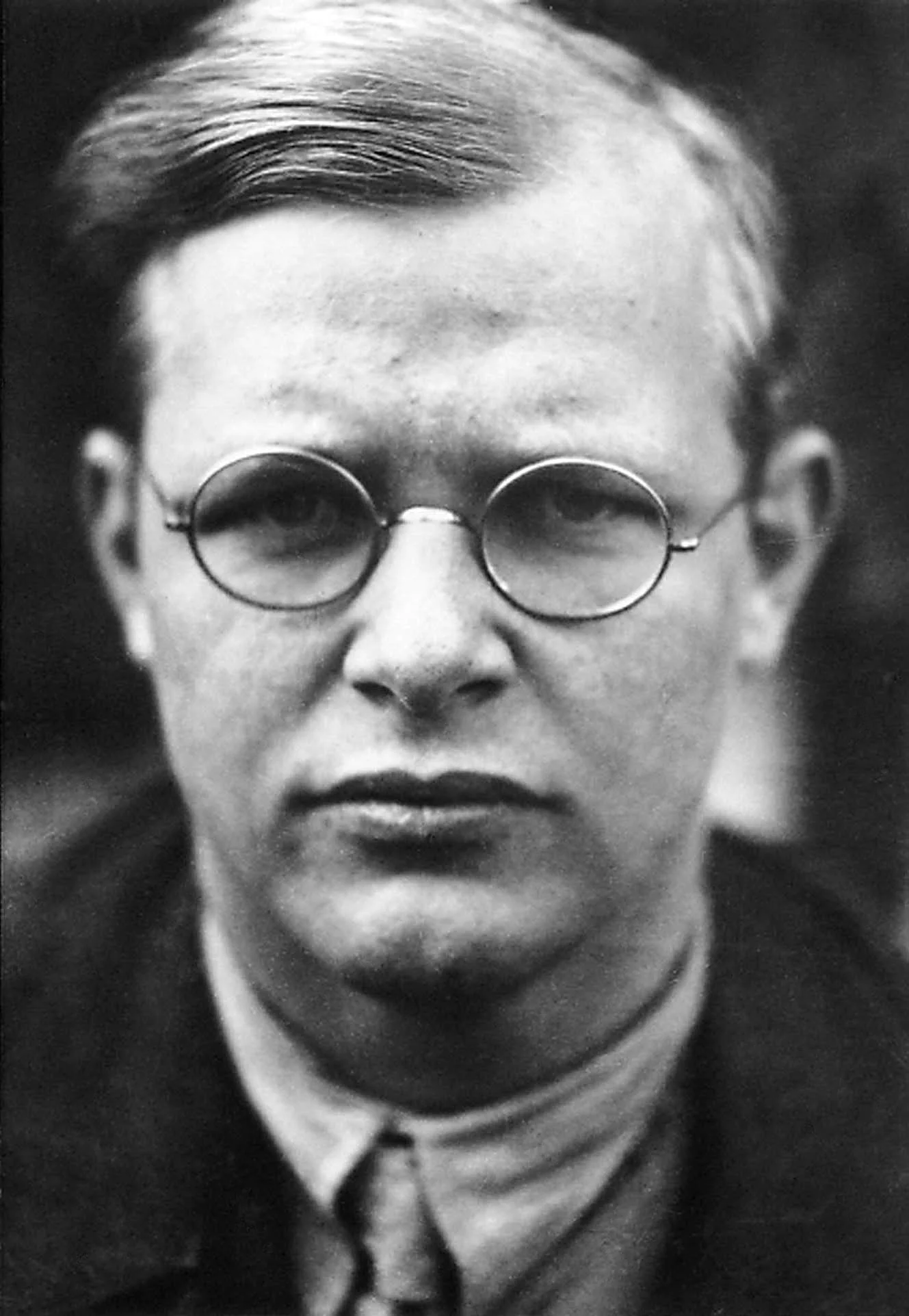
Dietrich Bonhoeffer (1906-1945) is well known for his theology, ethics, and resistance to the Nazi State. His prophetic struggle to emancipate the church from the influences and subsequent collusion with an evil government led to his eventual demise in a prison yard only a month before the surrender of Germany. Due to these overwhelming challenges, a strong theme throughout Bonhoeffer’s life and writings was on the critical necessity of community, both for the well-being of the church, and the life and mission of a people.

Bonhoeffer knew that it was critical to support new leaders for a church in crisis. Leaders that would speak truth to power, support their communities to join in solidarity with the persecuted, and actively resist evil. After the gestapo closed his seminary in Finkenwalde, Bonhoeffer had time to reflect on the essential nature of Christian fellowship. Life Together was published in 1939 and has become a classic text on the life of the church.

In Life Together, Bonhoeffer discusses the need for both solitude and community. In fact, one without the other is detrimental to one’s life with Christ. “Let him who cannot be alone beware of community.” We must engage in prayer, struggle, and be able to be before God alone. However, “let him who is not in community beware of being alone.” Bonhoeffer argues that we are all called into community, and we cannot serve others without relationships. Indeed, to emphasize this necessity for fellowship he argues that if we reject others then we “reject the call of Christ!” In solitude we recognize our need for community, and within community we also recognize the gifts of solitude.

We need each other, because it is through each other that we encounter Christ. Our encounters, including the life of the community, enable us to receive the gifts that God desires for us. Bonhoeffer writes: “Christianity means community through Jesus Christ and in Jesus Christ. No Christian community is more or less than this. Whether it is a brief, single encounter or daily fellowship of years, Christian community is only this. We belong to one another only through and in Jesus Christ.” These gifts enable us to serve others from a place of renewed life, and hope. Service without encountering Christ through fellowship often leads to a deep tiredness, and perhaps despair, from attempting to serve from our own abilities and energy. “The physical presence of other Christians is a source of incomparable joy and strength to the believer,” Bonhoeffer maintains. Both solitude and community are necessary to have life in Christ. Finally, Bonhoeffer reminds us that “Jesus Christ alone is our unity. He is our peace. Through him alone do we have access to one another, joy in one another, and fellowship with one another.”

The church of Germany was encountering a crisis of identity in the face of evil. Bonhoeffer knew that those called to serve during that perilous time needed lessons on the critical importance of community in order to live out God’s call and mission. Life Together offers a powerful description of God’s gift of community. We too need these reminders during our time of increased isolation, and challenge. It is through Christ encountered in fellowship that we find our identity, and lasting hope.

Prayer, Christian Community, and the Presence of God

by: Norm Wetterau , M.D. - FMHF President

Recently my wife had two aneurysms clipped. The fact that they were discovered without having them rupture was a miracle in itself. Her recuperation has not been rapid but I am learning a lot through this. I know that many of you have had similar experiences. So many people said they would pray. They prayed that the operation would be a success and prayed for her recovery. I was frightened and praying that Christ would be present with Nancy in the operating room and with both of us in her rehab and recovery process.

As her recovery became longer, people continued to pray. The number praying was large: our family, church, friends, and even prisoners in the Maximum Security Prison, Attica. She had spoken at a retreat there and shared about her coming surgery. In all of this I realized that God does not answer these prayers just through her healing but that in a sense God showed His presence through these people’s prayers . God is present through our Christian friends and community .

So many people in our church, friends and family are praying. Community is very important and a manifestation of Christ in the world. That community included guys in prison, Nancy was in an Attica prison retreat a month ago. Attica is a famous maximum security prison and many men spend the rest of their lives there and die there, but for some Jesus walks with them. At a retreat there she gave a talk : “Confidence in Christ.” In this she talks a lot about her illness and ends up: I have been amazed at the PEACE I have felt for the last 15 months. I know many people have been PRAYING for me and God is right beside me.

The prisoners prayed for her and promised to pray for the surgery. So I sat next to her in the hospital knowing that church friends, other friends and family are praying but also prisoners in this notorious maximum security prison. God is here because of these prayers but He is also here because he is where one prays prayer makes one aware He is here. What I have discovered is that God is also present in a praying Christian community. Many times Jesus shows himself in other people and here is an example: Regardless of what happens God is here and also his Body, the praying community of faith which is the church and includes those in Attica which are also part of that community. God shows himself through others I knew that and knew that in some cases God has shown himself through me, but this is even better, seeing God respond to our needs through others. Community is something that God can create if we let Him.

2019 Conference Announcement

Free Methodist Healthcare Fellowship Fall Retreat:
September 20-22,2019 at the Essenhaus in Middlebury, Indiana

Theme: Serving God Throughout our Professional Lives

Speaker: Dr. Bill Morehouse

He has spoken often locally and at the Christian Community Health Fellowship National Meetings. Through his talks and discussion, we will explore Christian calling to students, residents, practicing health professionals and the issue of retirement.

Invite a student, resident, young doctor, dentist, nurse, or someone older or considering retirement. Share this newsletter with them.

Make room reservations directly through the Essenhaus (800) 455-9471 or (574) 825-0052
Cost is around $150 a night, depending on what room you reserve.
Room block is held until August 20. You can cancel without penalty up until then.

Pay registration when you arrive: $125 for one person, $40 for a spouse, which includes Saturday evening banquet. There is student scholarship money available. Also, if we know enough in advance, we can likely fund childcare for the sessions. Contact normetterau@aol.com for questions or to indicate need for child care.

FMHF - Addressing Wholeness

by: Norman Wetterau, M.D. - FMHF President

Our group started out in 1960 as the Free Methodist Medical Fellowship. It was initially a fellowship of doctors and dentist, many whom had been involved in missions. The group supported each other and also our denominational medical missions. Most groups like this do not survive for almost 60 years, but ours has and has expanded our vision and mission. The expansion of our vision and mission goes along with the new vision of medicine which emphasizes holistic care and team-based care involving physicians, PAs, NP, nurses, social workers, and chaplains. Many of the improvements in life expectancy are due to social and public health changes, rather than new treatments. Our biggest medical challenges are now mental health, drug addiction and ageing. Lone doctors working my themselves may have limited impact on these conditions. Even all the health care professions need the help of community groups and social networks such as Churches. Certified patient centered medical homes need to document how they connect patients with chronic diseases to these non-medical groups which could include a church.

But it is not just medical professionals and their patients that need churches. Churches need to know how to respond to those with chronic diseases, developmental disorders, mental health issues and addiction. Note that Jesus healing were not just those with acute illnesses. Leprosy was a chronic, and isolating disease. Jesus touched these people and healed them. Other people were healed of strange behavior or epilepsy.

The woman with the hemorrhage had been suffering for years. Our churches are filled with those who are suffering and as the woman with the hemorrhage they had spent all their money on doctors and were no better. Now can the church minister to these individuals, or to those with chronic pain, or with incurable cancer.

In September 2014 our fellowship hosed a national speaker, Dr Willard Swartley and author of featured InterVarsity Press book of the year in 2012: Health, Healing, and the Church’s Mission: Biblical Perspectives and Moral Priorities. The book is more about the church then health professionals but addressed both. We recommend this book for pastors as well as health professionals. So our fellowship, through our website, retreats and our members, help churches become better healing communities.

Our fellowship has changed in several ways First we have become a fellowship of all healthcare professionals, not just physicians and dentists. We include chaplains and emergency responders. Secondly, we are not a fellowship just for ourselves but a resource for our churches. Our online publication try to address some of these issues. We want our website to be a resource for pastors and churches.

Walking with those in Need without Losing Heart: this was the theme of our September 2018 conference. The speakers, Doctors Eric and Rachel McLauglin, from Kibuye hospital, Burundi, talked about the difficulties of reaching out to those who are hurting in situations where our efforts appear futile .One begins to wonder if God is breaking the promises he made to you when he called you. Although they were using illustrations from their medical work, these issues are present in any church which is addressing seemingly impossible situations in people lives. Our December 2018 Newsletter is a real resource and the McLaughlins book on this topic, when it is published will be a even grater resources. Our fellowship wants those who cannot attend our retreats to still benefit. Check out the article in our December 2018 newsletter.

The December 2017 issue has two articles on Soulcare. Medical science today now recognizes the important of soulcare, and we want to share this with Free Methodists in medical professions but also with pastors and those in our churches who minister to the sick.

Our November 2015 newsletter summarizing our conference which included 7 chaplains who shared how they relate to those who are ill. They also shared valuable insights on how people can effectively visit and support those who are ill. We have posted extensive notes on how churches can more effectively minister to the sick.

Finally, this summer at a General Conference Breakout session, Dr Wetterau will be addressing how churches can aid those who suffer from addictions. His presentation and resources from this will also be posted on our website. Anyone is free to sign up for our newsletter. Let your friends know about these resources including the one produced by our chaplains and the one that will appear after general conference on addiction.

Please share this article with your pastor and others. Go to www.fmhealth.org, read some of the material and sign up to be sent future information. If you are a healthcare professional you can also become a member and support us with fifty dollar annual dues. Thank you.

FMHF Lives on with a Purpose

by: Tim Kratzer, M.D.

Hearing Drs. Eric & Rachel McLaughlin speak at our annual meeting in Warm Beach, WA brought to mind the reason why I am a member of the Free Methodist Healthcare fellowship. We often get into our routines and keep on doing what we do without thought or purpose. The Fellowship challenges us to live our lives with purpose and meaning.

We began meeting as a Fellowship more than 50 years ago, young and middle-aged professionals looking for meaning and purpose, and in so doing encouraging one another. And yes, we would also question and probe into the basis for our faith. Why do we do what we do? We experienced new energy as we met together.

How is this energy and purpose passed on from generation to generation? I have heard this said about the Free Methodist Fellowship, “Now why is it that we are meeting?” We look around and see more folks in our age group – old, slow and gray. Where are the young folks asking the questions we posed back in the day Why are we spending all this time and money to gather for these annual meetings?

Then there comes the moment when our vision is renewed. Eric and Rachel are a young medical couple who have followed God’s call into medical missions. They met in medical school as they were following God’s call and now they are raising their family as they are following God’s call. They are at Kibuye Hope Hospital as part of the Serge group, a group of young medical missionaries who have committed themselves to one another and God. They are committed to serving the poorest of the poor. Eric and Rachel spoke of the reality of providing medical care for the under-served in Burundi. They spoke of how poverty and neglected medical conditions often exceed their human resources, “Walking with Those in Need without Losing Heart” as they so aptly described it.

As they spoke I felt my heart drawn back to our days in medical school, a time when our call to medical missions was taking us on a path not understood or embraced by many in our circle of friendships. What an encouragement it was to have a medical missionary couple, Dr. and Mrs. Yardy, invite us to come to our first fall meeting of the Fellowship. We met medical professionals who were living their lives with meaning and purpose. When these folks heard our story, they affirmed the choices we were making to follow God’s call into medical missions.

The story that Eric and Rachel must be shared with our young people. We will again have the opportunity to reach the medical professionals of today as we meet this year at Essenhaus in Middlebury, IN. Our guest speaker, Dr. Bill Morehouse, has written how he followed God’s call in medicine as a ministry to the medically under-served here in America. He has spoken often locally and at the Christian Community Health Fellowship National Meetings. Through his talks and in our group discussions, we will explore the Christian calling of students, residents, practicing health professionals and even those who are retired.

So the challenge comes to us: Invite a student, resident, young doctor, dentist, nurse or other healthcare professional. Or you might even invite someone older or who is approaching retirement. The reason we meet ever year is to look at our careers in the medical field as an opportunity to serve and preach the gospel with acts of compassion, and sometimes with words. Peter said to the paralytic, “I have no silver and gold, but what I do have I give to you. In the name of Jesus Christ of Nazareth, rise up and walk!” (Acts 3:6)

Navigating Loneliness in the Era of Virtual Care

BY: NORM WETTERAU, MD - FMHF PRESIDENT

The January 24, 2019 issue of the New England Journal of Medicine had an opinion article titled, Navigating Loneliness in the Era of Virtual Care. This esteemed journal has had several articles on physician burnout and this article addresses an aspect of that theme. The Article below is based on this article, plus additional ideas from the newsletter’s editor in paragraph 2 and 4, Norman Wetterau.


Doctors used to make hospital rounds and discuss cases on the floor or in the doctor’s lounge. Doctors belonged to medical societies. They ate lunch and at times dinner together. Today they communicate with the front desk via the EMR, so they may not see any fellow doctors or staff during their day in the office. They see patients with their face in the EMR. There is much written about burnout, and this opinion article addresses what may be part of it. In addition to what this article says, there is the subject of social cohesiveness in the younger generation. They are not joiners of medical organizations, other groups or churches. My grandson, who rarely gets together with his friends after school argues that they are more connected due to social media. There may be some truth to this, but not for all teens, and certainly not for doctors who spend 60 hours a week on the electronic medical record and no longer see medical or other friends.

Once burnout begins, some people become more isolated. The workload is so great that there is no time to talk to someone at lunch or to share an evening together. A feeling of hopelessness comes on. This same process happens in other areas of one’s life. When things go bad, hide out. The article proposes some solutions, including face to face time with other health professionals. Some of this time is in non-medical activates and large medical groups can help felicitate this. Another way is through discussion about certain themes of medicine and of life. What he describes sounds a little like our retreats. As members of the Free Methodist Health Fellowship, let us see our own churches, and even our fellowship as a solution to loneliness. God made us to be connected. Being involved in a church is part of this and being connected to a group like the Free Methodist Healthcare Fellowship cannot hurt.

Let’s invite other: MDs, NPs, PAs, RNs, and others. Our theme for September’s Conference is: Serving God Throughout our Professional Lives, will bring us together to explore this, whether one is just starting out or is in retirement. The speaker, Dr. Bill Morehouse, also brought doctors and medical students together through the University of Rochester Christian Fellowship. One good way to prevent or address burnout is to share time and one’s life with others, including those Christians in our profession. A weekend of physical, social, and spiritual refreshment is a good way to find joy and prevent burnout. Share this article and invite a friend to come along too.