Civil War in Congo and Ethiopia: Lament and Pray

By: Tim Kratzer, M.D.

In the Democratic Republic of the Congo tribal conflict resulted in a civil war from the late 1990s up to 2006 with the loss of more lives than in any war since WW II. Free Methodists were at the center of the slaughter yet how many of us did not even know about it. When things are very bad it is not too bad to pray. God does not call us to forget it but to lament. Indeed, we did help and with some help, our hospital in Congo remained open. There is still trouble in parts of the Congo, but God is answering prayer. UN troops are there now but these troops cannot extinguish hatred. In Rwanda and Burundi, there were major efforts by churches and outside agencies to bring about forgiveness and peace. When I was teaching mental health at Hope Africa University, I saw what had been happening. Some of the students watched as their parents were killed yet they forgave those who were responsible. God can heal and abolish hatred, even in regions of the Congo where tribalism continues.

But now we have a new civil war, in Ethiopia and since Ethiopia. The war is between Tigray prominence and the central government. Although the central government was reported to have defeated the Tigray rebels, that may not be the case and many killings continue.

Ethiopia’s Civil War Is a Disaster That’s Only Getting Worse
Bloomberg Opinion, August 31, 2021

There may be terrible famine. Aid cannot get to those in need. Farmers cannot plant their crops and animals are dilled. Again, this is too horrible to think about. We have enough problems of our own, but these are God’s people, even if they are destroying each other and themselves. Many are Christians. Again, we need to lament and call our churches to pray.

Would it be too much to pray for these nations each Sunday for the rest of the year or pray once a month with a progress report? (Check BBC and African news.) And yes, our churches there need money but let’s start with real lament and prayer. The problems are beyond money, beyond the UN and at this point, they seem to be even beyond our churches but they are not beyond God.

Praying for Haiti After Another Deadly Earthquake

BY: NORMAN WETTERAU, M.D. - FMHF PRESIDENT

Haiti: Ten years ago, Haiti had a terrible earthquake. In 2021 the president was assassinated, and the government is unstable. There is a covid epidemic.  Then there is another major earthquake. The government seems incapable of helping its people. Even outside relief agencies are having trouble getting help to where it is needed. How can God allow one country to suffer so much? Many Free Methodists are giving money to help.  We wonder what our Church leaders in Haiti are thinking

How to Pray for Haiti After Another Deadly Earthquake
Christian leaders in Haiti share what is different for believers between 2010 and now, as death toll passes 1,900.
[From Christianity Today]

Christianity Today had an interesting article, which is worth reading (see link above). They point out that the repeated damage was partially due to the earthquake, partially due to the poor government, and partly due to an attitude of hopelessness. Lament and hopelessness are not the same. After the last earthquake, people asked why buildings were not built in a way to help them not collapse in an earthquake. After the large quake ten years ago, building codes were developed but ignored, even by churches. Pastors in Haiti point out that nothing changed and that if larger buildings had been built to code, the loss of life would have been less. Of course, corruption is part of the reason. Corruption causes nations to stay in poverty and prevents change. But rather than complain and blame, we need to lament corruption and ask God to raise up national Christians to challenge the norm such as the pastors who are quoted in this article.

The article is an interesting discussion of political and theological issues that help make Haiti unable to change or even usefully use aid. There is much lament but not hopelessness. God is at work and Christians in Haiti and outside or trying to help. Various pastors for Haiti are quoted and the article gives lists of specific things to pray for concerning Haiti. Share this with your church (as well as what is happening in Africa). Many times, we do not want to know because we do not know what to do, but we are called to prayer and lament. We are not to look away or be too busy but as we lament and pray, and even give, we realize how seemly hopeless the problems are in Haiti yet we are called to lament and pray, not ignore and pray. Over the years God has does some great things through our mission efforts and the efforts of the local church. People have given and have prayed, let’s continue. Share the link to the Christianity Today article with others after you read it.

Another viewpoint:

Churches In Haiti Lie In Ruins After The Earthquake But Still Try To Comfort And Help
NPR News (April 30)

This news reports the destruction of catholic churches but then points out how much the churches do for the people. For many they receive their education in church-run schools, and churches supply food and much help to many, all things that the government seems unable to do. Protestant churches were included, and the report shows that despite all the troubles, God is still at work through churches in Haiti. Destruction of the buildings do not change that. This report in a secular news outlet makes me feel very good as a Christian. Keep praying and keep helping.

Lament: For the Coronavirus and Beyond

BY: NORMAN WETTERAU, M.D. - FMHF PRESIDENT

Our churches could not meet in person. Our friends and relatives have been ill, and some have died. We have been isolated.  For many American Christians, we have been in a state of sadness and lament over the coronavirus. Some have also been sad because of our political situation.  Both sides are upset at our inability to agree on solutions to our national problems. Finally, our national life expectancy has decreased by two years even before coronavirus due to drug-related deaths and suicide. These are deaths of despair. Christians need to lament, turning the issues over to God and seeking his help and wisdom, and asking him to take away our anger and hopelessness.

This is not something we are good at. Soong-Chan Rah in his IV Press book on Lamentations, Prophetic Lament: A Call for Justice in Troubled Times, points out that many evangelical churches focus on celebration and triumphalism. He is critical of this as expressed in some white suburban evangelical churches, especially large prosperous ones. He calls on us to look at the inner city, the poor rural areas, and our overseas church and lament, not just for them but for ourselves. Revival will come through lament and honest repentance, rather than through great programs, celebration, and triumphalism.

We will explore lament at our fall annual conference which will be virtual on Saturday, September 18.  In making the decision to hold this virtual, rather than meeting in person, our board experienced sadness and lament. Let us come together on zoom and explore this together with our speaker, Chaplain Larry Lyons.  His first session, starting at 9:30, will be a follow-up of his talk at our virtual retreat last year. This pandemic on other social issues has gone on and on. How are we to react, not just to the disease but to what our different opinions are doing to families and churches. Where is God in all of this?

His second session will be on emotional intelligence and creating the patient experience. How do we as healthcare professionals build empathic skills and create emotional support? We may be in lament but many of those who are hurting look to us for help, whether the problem is coronavirus itself, unemployment, or the death of a family member from alcohol or a drug overdose. We then have the opportunity to meet one another virtually in two one-hour chat sessions, giving an opportunity to reflect, listen and share. After these two sessions, Pastor Wayne McCown will lead a 30-minute devotional. The meeting will be kept open for all of us to socialize and share what has been happening in our lives.

But our problems at home are not the only problems. As I have been reading about what has been happening in Haiti, Ethiopia, and the Congo, I have been brought to tears. These human realities make our problems seem small. Are we aware?  Do we and our churches pray for these countries? The problems are beyond human solution, but we have Free Methodists in all these countries. We cannot forget them. Mathew 25 calls on us to help those in need. I am afraid that some American Christians not only have no interest in helping but do not even want to know what is happening.   Even if we cannot solve these problems, we need to call our friends and churches to pray.

At the last General Conference Bishop Lubunga from the Congo attended. He is Bishop of one of the largest Free Methodist Conferences, not one of the poorest but the very poorest country in the world and a country that is still in tribal conflict, a continuation of the civil war that took the lives of 5 million people 20 years ago. At general conference, the Bishop was introduced and there was a prayer for Congo. It was an important moment for our General Conference and for Congo. Let us speak out in our churches, conference, and even at a general conference if that is necessary. We must know what is happening, lament and pray. Nothing is too horrible to pray about.

Join us for our virtual conference but also join us for lament and prayer for what has been happening.  We cannot change all of this but God can and maybe God will even use us to help.

Future Plans and Ways to Become Involved

Our virtual retreat in September on the Coronavirus was a big success. Many more saw it than would have come physically to a weekend retreat, although we really missed the in-person meeting and fellowship. Many Chaplains watched and have complimented us on the program. Please share the link with others.

There are many Christian Health Professionals in our churches who have never heard of our group. Encourage them to go to our website, sign up for this newsletter, and watch the video of our conference, or Email a link to this newsletter and our website. We have added over 25 people to our subscribers since June 1. We currently over 300 subscribers. but want to add even more.

The virtual meeting showed us that we can do more than just have an annual retreat. Our purpose is fellowship, but also to help our churches address important health issues, including mental health, addiction, outreach to the elderly, and topics such as suffering and the coronavirus. Through virtual meetings, we can include people who might not be willing to travel to our annual retreats. Our board is also thinking of one or two one hour zoom programs in 2021.

At this point, we are planning on a face-to-face retreat at the Essenhaus in Indiana. We have reserved the dates of September 17-19, 2021. A final theme and speaker have not been determined yet but we are considering a follow-up on our coronavirus meeting with an emphasis on lament. Please email any thoughts you have to our president, normwetterau@aol.com

Many believe that God can speak to us during the pandemic, and by next September we can look at that theme, and see what we have learned.


Fall Virtual Conference:

We want to thank all the presenters and all those who attended.

  • Rebecca Taylor: video and video host and NE Seminary

  • Chaplain Larry Lyons

  • Chaplain Rick Kerr

  • Chaplain Kathy Petteys

  • Dr. James Boal

  • Steve Noblett

  • Richard Reynolds

  • Tim and Patricia Porter

Our January 2020 Newsletter has a copy of Kathy Pettey’s presentation. It brought me and others to tears when she presented it. Read it or listen to it again. I wrote a summary of Steve Noblett’s talk. All the other talks were equally good and we encourage you to go to events and listen to all the presentations. Larry Lyons was a chaplain in a hospital that was overrun with cases and deaths. Rick Kerr is a chaplain who works in an ICU. They talked about many things, including helping the staff, not only at the time of the outbreak but in the following months. Dr. James Boal works with Larry Lyons and described the medical situation in the hospital during the height of the problem. Richard Reynolds is a chaplain who works with the homeless, a group that has major problems during this epidemic. To do real justice to these speakers you need to hear what they said.

A Talk with Steve Noblett on Coronavirus and the Church

This summary is a combination of what Steve Noblett said, and Norm Wetterau’s memory and interpretation. Listen to the full presentation under events on our website. Go to 152 minutes or listen to all the talks.

Revival is often preceded by Great Tribulation. Are We and our Churches Ready for this?

We asked Steve Noblett, executive director of the Christian Community Health Fellowship to share his thoughts on how the church might respond to this epidemic. His talk started with a surprise that he had not told me about in the conversations leading up to his agreement to speak. A year ago, he had been diagnosed with metastatic melanoma and told he had only months to live. He had a severe reaction to his first treatment, so treatment was stopped, and he prepared to die, but many people in the CCHF and others prayed. To his surprise, he was totally healed of this, and when asked what this meant, he said he did not know except that 2020 is the scariest and most wonderful year for him to be alive.

In talking to him before the program, he said that the problem is not just coronavirus. The epidemic has shown us that many things we had great faith in were not as good as we thought: the medical system, the economy, our political system, and our society as a whole with great economic and social divisions. Suddenly the effect of racism and poverty on dying from the coronavirus, among other things became clear. Our churches had to be closed but even if they were open what should they say? So I asked, is there any hope or anything to talk about? He did speak, so the answer was a resounding yes.

He started by asking, what is God trying to do? He is doing what he has done in every generation: he is advancing the kingdom of God. This kingdom is tangible and among us. He does this in every generation, but at times there may be special events that allow his purposes to be advanced much more than usual, and he feels that this may be one of those times. One previous time was at Pentecost. Peter quotes the prophet Joel, but this quote has two parts: God’s spirit being poured out on all people and the fact that the sun will be turned to darkness and the moon to blood before the coming of the great and glorious day of the Lord: Everyone who calls on the name of the Lord will be saved. Steve sees terrible trouble and tribulation connected with revival. He thinks this may be one of those times. In a very great outpouring of God, there can be great advancement, but also great collapse. He thinks that is what we may be seeing at this time.

He spoke of Romans 8:19-24 19.

For the creation waits in eager expectation for the children of God to be revealed. For the creation was subjected to frustration, not by its own choice, but by the will of the one who subjected it, in hope that the creation itself will be liberated from its bondage to decay and brought into the freedom and glory of the children of God. We know that the whole creation has been groaning as in the pains of childbirth right up to the present time.  Not only so, but we ourselves, who have the firstfruits of the Spirit, groan inwardly as we wait eagerly for our adoption to sonship, the redemption of our bodies.  For in this hope we were saved. But hope that is seen is no hope at all. Who hopes for what they already have?

He did not feel that God sent Covid as a judgment, but it came and it revealed that our medical, economic, and social systems were inadequate systems that we had always depended on, so our reaction is to stop the destruction. We want to make it right again, but it can never be that way. because in a way our economic system and social structures are not that right. Our hope cannot be in what has been, but in what God can bring about. Our medical system is stressed, our economy, social structures, and education system are collapsing. These systems, although not all bad, are not held together by God. and they are collapsing. So, what does this mean? He does not know but said we must turn to God for the meaning. The church cannot receive all that God has if we are simply trying to put together the old: whether medically. socially or in our lives and churches. Do we believe that God has something for us? Will he pour out his spirit? Are we ready? Is this what we want?

The creation is groaning and what do people want? They want freedom, security, health, life, and community. All these things are products of the kingdom, but we have been living in the kingdom without the king. Some of the weaknesses are in the church, so there may be changes in society but there may also be changes in the church. Too often the church has preached a gospel of individualism. We have to capture all aspects of the kingdom as it affects individuals and our society. He talked about labor pains and how in the midst of labor one does not give up. A new child is born, and this is what Paul is referring to. We need to see our current troubles as such. What is coming next? (listen to his talk to get the full and somewhat humorous description of this.)

Our hope is not in a society that is falling apart but in a kingdom that cannot be shaken. This is a time where we can represent hope. We can represent life and we can represent security. We can step into this current situation and proclaim the whole kingdom. Now the walls are down, and people are open to connecting to us and may be open to the kingdom. It is a time to connect. We need to also listen and learn how we walk forward together.

He really believes that if we recognize our role and the churches rise to it, we can see the greatest awaking we have ever seen in our lifetime, perhaps in history, and he thinks it will be global. He encouraged us to take a different world view. Don’t forget the pain and reality, don’t deny the pandemic but step into the situation with unity, humility, and faithfulness to the gospel.


Stories from Long Term Care and the COVID-19 Crisis

By: Kathy Petteys, Chaplain with Heritage Ministries

Originally a Webinar presentation on 9/19/20.

I am Chaplain Kathy.  I am a Chaplain with Heritage Ministries that is based out of Gerry, New York.  I work in three assisted living homes in Jamestown, NY and a Nursing Home located in Western, PA.  I want to capture the story of the people living in long term care during this present Covid19 crises.  The Elder’s story I am going to share is a composite of the many Elders God has given me the gift of knowing and walking with as their Chaplain.  


I know they care, but time is always of the essence in getting a job done.  I never thought I would become someone’s job.

My name is Agnes Rosella Maloney.  I was born in 1936.  I ended up in a nursing home due to a series of strokes.  I could no longer take care of myself and it was too much to expect my family to take care of me.  My kids are scattered everywhere.  Only a couple of my kids stayed in the home area.  I lost my home of 40 years, two of my children died as adults (I had 7), I lost my husband 10 years ago, several siblings and of course my parents.  I feel like my life these days has been nothing but losses... Losing my independence has been so difficult for me.  Then having to have different aids give me baths and take me to the bathroom has been embarrassing for me.  I am wheel-chaired bound. They have so many to take care of it is almost impossible to sit and have a conversation just about the weather or things I enjoy talking about.  I know they care, but time is always of the essence in getting a job done.  I never thought I would become someone’s job. 

I have had a full life, but it is not over yet, I am still here.  I want you to know my story.  I have a story; everyone does.  I was born into a large family.  I was the baby of the family.  My home growing up did not have a television.  I remember December of 1941.  It was an exciting time because Christmas was coming and all my family was going to be together.  My older siblings were coming home.  I will never forget the day that our lives changed forever. It was December 7, 1941.  We were all sitting around the radio when the news came that Pearl Harbor was hit.  I remember my older teenage brothers saying to each other, “tomorrow we need to go and enlist.”  And that is what they did.  We were thrown into WWII.  Christmas of 1941 was not what we were dreaming of.  Three of my brothers left before Christmas that year for military service.  Two came home at the end of the war, one of those had been badly wounded.  We did what families do.  We helped each other out.  My childhood was also impacted by a polio outbreak.  It had struck our country for a third time in 1946. It was so bad that President Harry Truman declared polio a threat to the USA.  There seemed to be someone affected with this disease in every family.  But again as a family, we were there for each other and supported each other and our community as best we could.  Thankfully a vaccine was developed.  

I went on to grow up, get married and have my own family. My husband and I worked hard.  We were a middle-class family and as a young married couple, we did not have the privilege of studying beyond high school.  We had our ups and downs, our struggles and scares. But once again we always had each other as a family and with many friends, we were blessed.  We worked hard to buy our own home.  I was what they call today a traditional housewife. I had the privilege of staying home to care for the family and my parents and in-laws as they aged.  As my children were growing I had nephews I loved sent off to Vietnam.  It was another crazy time in our country.   We saw changes that needed to happen with the Civil Rights moment.  I don’t have time to tell the stories of people I know and the lives they lived.  Our country has seen many changes in my lifetime.  But as always I have had a loving family and a great circle of friends.

I lived a full life and my plan was to die in my own home with family surrounding me.  But the strokes took away my independence and to the nursing home I went to live out the last years of my life.  I had to have a roommate.  My only roommates in life were my sisters and then my husband. But now I was with a total stranger.  I have a strong faith in God so I know He was helping me through with all these changes.  The loss of my home was so hard, everything my husband and I work so hard for was whittled down to a small space.  But that was ok.  I adjusted.  But I still had some of my family and some of my friends who came to see me. 

I love to know about other people’s lives.  I have met folks who also, lost their independence and had to move to this nursing home I live in now.  I have met people who are moms and dads, grandparents, great grandparents, teachers, nurses, engineers, firemen, doctors, farmers, ministers, veterans of WWII and Vietnam, the list goes on and on. Such a wealth of experiences in this nursing home.  I even know people who worked here in their younger years.  Others I have met came to live here quite young due to accidents.

 I was adjusting.  As long as my family could come and see me, it gave me hope.  The hugs, the in-person “I love you”,  the gathering at Thanksgiving and Christmas gave me hope.

I have had regular visits from family.   They would come and celebrate my birthday and holidays.  One of my sons came every Sunday to take me to the church service in the nursing home.  A lady on my floor had a son or daughter come every day to talk with her while she ate breakfast and then they would take her for a stroll in her wheelchair.  When I came to live here we had special trips to the store, the county fair and every week we had Bible Studies we could attend and mid-week devotions.  We also had services for the Catholic folks and the Protestants on Sunday. A group from the Brethren and Amish communities would come and sing for us, often. Their music is absolutely beautiful and full of hope.  I was adjusting.  As long as my family could come and see me, it gave me hope.  The hugs, the in-person “I love you”,  the gathering at Thanksgiving and Christmas gave me hope.  With family and friends around me, I felt like I could get through the many losses I have faced in life.  I could live and really live in a nursing home.  

Then this virus hit out country after Christmas 2019.  COVID-19 is what they call it. Who would ever thought the government would come into my nursing home and tell us we could no longer have in-house visits.  We have a restaurant in our home and that was closed.  We all had to eat isolated in our rooms.  The shocking rules kept coming.  Our hairdresser was not allowed to come in.  NO HAIRCUTS! Some of us had our hair done weekly.  Many of the men had regular hair cuts every other week.  The most shocking thing we were told was that our families and friends were no longer allowed to visit us.  Oh yes, I could see them through a window.  But sometimes there was a glare or I could not hear.  Even though they were only inches away, it felt like they were miles away.  I wanted to hold my new great grandchild, but I could not.  In the nursing home, group activities were stopped and no more gathering for church.  The Catholic deacons could not come in to give services or communion.  This happened several weeks before Easter 2020. Now Thanksgiving and Christmas are coming.  Will I have to live through those holidays without family and friends?  We had a bit of hope last week, families were able to visit, but six feet apart and no touching, mask on and someone present so we would not be able to sneak in a hug.  Then staff tested positive, asymptomatic, but positive.  Back to the rules of no visits.  Everyone who gives my care in this place is masked and has to wear eye protection.  So many barriers.  Honestly, why live?  The community that gave me life and a reason to live cannot even come near me. What is most important to me has been taken away...family.  I see in other residents besides myself: a very deep depression, hopelessness, anxiety.  I hear other residences say, “I miss my wife; I am old, I don’t have much time left; I can’t hold my grandchild or great-grandchildren; It doesn’t matter if I get Corona or not, I am going to die without seeing/holding/hugging my family; All I want is my hair cut; I cannot hear through a window!; All I want to do is go out with my son for ice cream;  I have completely lost my summer;  I am bored; I have to be in hospice to have family hold me again...” 


Where is Jesus?  That is where I want to begin with my story as a Chaplain.  I understand that the lockdown in nursing homes saves lives.  This virus, as we know when it gets into a nursing home it spreads like wildfire.  When I was a little girl growing up on a dairy farm in the Adirondack’s of New York, a neighbor,  by the name of Ann came and picked me up for church.  I was unchurched.  She had a little girl my age at the time (5-years-old), my best friend during those years.  My memories of my little church fill me with joy.  Ann and her faithfulness to bring me to church when she and her husband had a bunch of kids was such a blessing to me.  Ann in her 90’s died in a nursing home where the virus got in and spread.  Her family could only stand outside the window shouting I LOVE YOU MOM.  She loved Jesus and I know I will see her one day again! That brings me hope and comfort.

As a chaplain, I see the human plaques of HOPELESSNESS, LONELINESS, and BOREDOM invading the humane spirit.  Because of the laws passed down to us from the government, we are limited as to what we can do as humans.  BUT that does not limit God.  God is never limited.  When you think God has abandoned you read and memorize Zephaniah 3:17.

“ For the LORD your GOD is Living among you, He is a mighty Savior, He will take delight in you with gladness.  With His love, he will calm all your fears.  He will rejoice over you with joyful songs.”

For such a time as this the Lord Jesus has called His believers to lead and be His Voice.  Jesus is with us and working through us as believers.  In these months, my Chaplain responsibilities can be defined by three words:  PRAYER/LISTENING/VISITATION.  I do prayer walks around my Nursing home in Pennsylvania several times during my work week.  The Lord Jesus has given me many opportunities to not only share the love of Jesus with the Elders but also with their families and my co-workers. 

I would like to conclude with this thought: Every day at work I need to put on 2 types of PPE.  One set is my mask, goggles, and a gown(at times). The other PPE is found in Ephesians 6:

A final word: Be strong in the Lord and in his mighty power. Put on all of God’s armor so that you will be able to stand firm against all strategies of the devil. For we are not fighting against flesh-and-blood enemies, but against evil rulers and authorities of the unseen world, against mighty powers in this dark world, and against evil spirits in the heavenly places.

Therefore, put on every piece of God’s armor so you will be able to resist the enemy in the

time of evil. Then after the battle you will still be standing firm. Stand your ground, putting on the belt of truth and the body armor of God’s righteousness. For shoes, put on the peace that comes from the Good News so that you will be fully prepared. In addition to all of these, hold up the shield of faith to stop the fiery arrows of the devil. Put on salvation as your helmet, and take the sword of the Spirit, which is the word of God. Pray in the Spirit at all times and on every occasion. Stay alert and be persistent in your prayers for all believers everywhere.

And pray for me, too. Ask God to give me the right words so I can boldly explain God’s mysterious plan that the Good News is for Jews and Gentiles alike. I am in chains now, still preaching this message as God’s ambassador. So pray that I will keep on speaking boldly for him, as I should.

The “chains of Coronavirus, does not stop the message of Jesus.  Where is Jesus?  He is right here, in you and in me.  He is Immanuel! God with us!

Living Life with Purpose

By: Tim Kratzer, M.D.

I find myself thinking a lot about Nundu where a Free Methodist rural hospital is located. Nundu is where we raised our family and lived out our missionary call to provide healthcare in the name of Jesus. How did we end up in South Kivu, a province of eastern Democratic Republic of the Congo, far away from family and friends?

God works in amazing ways, calling us to serve him and transforming us to be the people we were created to be. As a 6th grade student, I very clearly heard God calling me to be a missionary doctor. I even wrote a grade school term paper on the Belgian Congo, as it was known in that day. It’s a long journey from being a 12-year-old to being a 75-year-old retired missionary doctor. Connie was also being called to be the wife of a missionary doctor, even before she met me at Greenville College. As I entered medical school, it was not just me but it was us. How did we complete the course?

Family, friends, and faith in God have guided us along the way. Christian faith was modeled for us in my family. The fellowship of believers nurtured us. God has been with us each step of the way. The Free Methodist Medical Fellowship, as it was known when I was a medical student, came along to encourage us in only the way a group of healthcare professionals could. I met with folks who understood where I was in my journey of faith and professional development. In that fellowship, I met folks who encouraged me to follow the call into medical missions and supported me with their prayers as my wife and I were appointed as Free Methodist missionaries.

The journey is not yet complete. We continue to be a part of what is now known as the Free Methodist Healthcare Fellowship. I fellowship with others who continue to see healthcare as more than a career. For each of us, it is a calling. Our time at Nundu was interrupted when we left Central Africa during a time of civil unrest. By God’s grace, the Deaconess Nundu Hospital continued to minister, and now we have the blessing of encouraging the work of the church as it continues to provide healthcare in South Kivu.

The mission of the Fellowship is to encourage healthcare professionals to pursue their careers as a calling, a calling to minister in the name of Jesus. I am encouraged in that calling. We as a Fellowship continue to reach out to young people as they respond to God’s call on their lives. What a blessing to live life with a purpose.

Post-Conference Fellowship Zoom

For those FMHF members who want to fellowship, we plan to have a Zoom call Saturday night, September 19, at 7 PM. EDT. People can briefly share what they are doing and provide a reaction to the earlier talks.

We also want to get your thoughts on future events. Should we plan on more virtual meetings? If we meet next year, where do you want to meet and is there some theme you would recommend?

If you might want to participate in Saturday evening’s Zoom fellowship email normwetterau@aol.com and he will send you the link. The link for the conference, which can be found here, will also be emailed to you. The link for this fellowship will be different and will only be sent to those requesting it.

Other News for our Fellowship

There is no charge for our virtual conference, but we would appreciate $50 dues or a donation to our group. You can give on our website here. Why not do this now?

We are also looking for some new board members. Pray and email normwetterau@aol.com or call norm at 585-705-8811.

FMHF News - August 2020

Free Methodist Healthcare Fellowship is going to do something TOTALLY NEW!

Our fellowship is 60 years old. Initially, medical missions was the main interest. We gathered together for fellowship and to hear a church leader, professor, or pastor minister to us over a weekend. We plan to continue to do that after the Coronavirus is over. Over the years our mission moved more to promote holistic healthcare and being a resource to our churches. It was not just a fellowship, but a group of health care professionals that tried to reach out to our churches. We still had retreats focused on missions, but also on suffering, and one with chaplains on visiting and ministering to those who are ill. We had a session at General Conference on substance abuse. Over one hundred pastors, delegates, and friends attended.

The coronavirus has forced us to cancel our fall in-person conference but is giving us an opportunity to do something new: a virtual conference that is easily available to many more Free Methodist Healthcare Professionals. This will take place Saturday, Sept 19 at noon EDT. The theme will be Holistic Health Care in the Midst of the Coronavirus Crisis. The Free Methodist Chaplains Association will join us in this conference and are supplying most of the speakers. The zoom conference will be live, so those listening will have a chance to ask questions or make comments. People can also post comments on our website. The program will be recorded and placed on our website, so if you like what you hear, you can share it with others.

Chaplain Larry Lyons and Rick Kerr work in hospitals and ICUs. Chaplain Kathy Petteys works in a nursing home in Rochester, NY. They will share the challenges of sharing God’s love with patients, their families, and the hospital staff. Some of the patients might not get better. Staff are exhausted. How does one deal with fear in these situations? Chaplains Richard Reynolds ministers to the homeless. He also got coronavirus, so he will share as a chaplain to the poor who are at high risk and also share as one who became ill. Finally, Steve Noblett, director of Christian Community Health Fellowship will share some of the challenges that Christian office-based practices faced. He will then share his own view as a Christian as to what this epidemic might mean and what our response might be.

At the end, there will be an opportunity for questions and short responses. The total conference will last 2 ½ hours. Longer meetings on zoom can be difficult. so we want to be mindful.

To learn more about the Conference and to find the link, click here.

Just click on the link. You will be asked to give your name but you do not need to sign up in advance. The Zoom access which belongs to Northeastern Seminary can accommodate several hundred people. Please join us. If you have any questions email normwetterau@aol.com

A Prayer Amid an Epidemic

By: Kerry Weber, Executive Editor of America Magazine

Originally published in America Magazine: The Jesuit Review. Used with Permission.

Jesus Christ, you traveled through towns and villages “curing every disease and illness.” At your command, the sick were made well. Come to our aid now, in the midst of the global spread of the coronavirus, that we may experience your healing love.

Heal those who are sick with the virus. May they regain their strength and health through quality medical care.

Heal us from our fear, which prevents nations from working together and neighbors from helping one another.

Heal us from our pride, which can make us claim invulnerability to a disease that knows no borders. Jesus

Christ, healer of all, stay by our side in this time of uncertainty and sorrow. Be with those who have died from the virus. May they be at rest with you in your eternal peace.

Be with the families of those who are sick or have died. As they worry and grieve, defend them from illness and despair. May they know your peace.

Be with the doctors, nurses, researchers and all medical professionals who seek to heal and help those affected and who put themselves at risk in the process. May they know your protection and peace.

Be with the leaders of all nations. Give them the foresight to act with charity and true concern for the well-being of the people they are meant to serve. Give them the wisdom to invest in long-term solutions that will help prepare for or prevent future outbreaks. May they know your peace, as they work together to achieve it on earth.

Whether we are home or abroad, surrounded by many people suffering from this illness or only a few, Jesus Christ, stay with us as we endure and mourn, persist and prepare. In place of our anxiety, give us your peace.

Jesus Christ, heal us.

Meet Our Speakers: Steve Noblett

Steve Noblett, Director of the Christian Community Health Fellowship will speak at the upcoming virtual retreat on September 19.

In addition to several Free Methodist Chaplains, Steve Noblett has accepted our invitation as a speaker. CCHF is a fellowship of over 200 Christian community health centers. He will share with us and invite feedback and response.

During the Coronovirus crisis, he has spent hours on the phone with directors and staff of Christian Community Health Centers as they have had to deal with overwhelming stresses and also choices that they have had to make. Whereas other speakers will talk about hospital and nursing home issues, he will talk about primary care and community issues.

In addition, he will share his own vision of the crisis as it involves the church and the opportunity that the church has today. Things are falling apart with a health crisis we cannot control, the closure of schools, massive unemployment, and the protests against racism and police violence. The racism and police violence have been with us a long time, but in the midst of everything that is happening, all this is boiling up and action is demanded, yet all the issues, when taken together, are beyond a human solution.

He points to Romans 8:22, where the creation is groaning as in the pains fo childbirth, yet birth will come and God will act. He believes that what is happening is the result of massive failure of human efforts, but at such a time God can act. Christians need to show Gods love and hope. It can be a time for people to turn to God as they see how Christians have responded to all these troubles (if we are responding in the right ways.)

After his talk, we will open the virtual floor for others to comment on. How do we respond as health care professionals but also as Christians and members of our churches? People can also share their thoughts on our website.

The Great Reset

By: Dierdre L. McCool, Vice President - Butterfield Foundation

So many things have changed since the Coronavirus entered our world. At Butterfield Foundation, we experienced a COVID-19 workplace exposure on March 13. Within three hours, we scrambled to put policies and technology in place to allow our team to self-quarantine and work from home. Like many other states, Oklahoma had Shelter-in-Place legislation that launched within a few weeks of the exposure. Thankfully, we had become experts at telecommuting!

During the early days of the pandemic, responses to the unknown befuddled me. Mass hysteria seemed to be ever-present as was the lack of hand sanitizer, Clorox wipes, bread, flour, and toilet paper. Businesses closed, highways were eerily empty, and masks hid smiles. Fear and anxiety were constant undercurrents. Many charitable clinics and social service organizations started to struggle financially. Securing PPE and other necessary supplies to minister to at-risk populations was proving expensive. The Butterfield Foundation acted quickly, setting aside $200,000 in Covid-19 grant funding.

In my neighborhood, I noticed some interesting ripple effects. Children began to appear on our sidewalks on bikes, scooters, roller skates, and at our pond with fishing rods. Dads and moms strolled by our house holding hands. Unruly yards morphed into garden masterpieces. My life also changed. My husband and I cooked healthier meals, walked every morning, and increased our prayer life. We had more time for family and friends. Jesus was – and still is – resetting my pace and priorities.

I recently learned Corona means “crown” in Latin. In essence, COVID-19 is the “crown virus.” Based on how things have changed, I would certainly agree it wins the prize for changing the world in 2020. However, another Person wore a crown that promises eternal change: Jesus Christ. Over 2,000 years ago, He donned a crown of thorns so we could experience redemption and complete restoration. Thankfully, His crown trumps all crowns!

It seems as if God is up to something during this pandemic. He recently brought the following Scripture to mind:

Isaiah 43:18-19 - “Remember not the former things, nor consider the things of old. Behold, I am doing a new thing; now it springs forth, do you not perceive it? I will make a way in the wilderness and rivers in the desert.”

According to Christianity Today, millions of worried people who turned to the internet due to COVID-19 anxiety have ended up connecting with Christian evangelists and coming to know Jesus. They have exchanged a mutable crown of fear for an immutable crown of love. The Great Commission is resetting…it is going digital.

Many of the charitable clinics in Oklahoma – and throughout the nation - upgraded technology and implemented telehealth. The ability to reach more patients with whole person healthcare is expanding. Is He in the process of re-setting healthcare too?

I think He is offering all of us a chance to reset our lives.

In closing, I want to encourage everyone to evaluate heed the words of the Isaiah to see what – if anything - Jesus wants to “reset” in your life. The following are a few questions to help you get started:

  1. What needs to be “set again?”

  2. What needs to be different?

  3. What specific areas of life would you like to change?

  4. Where do you need to spend less time?

  5. What do you need to more of?

  6. Why do you want to change these things?

2020 Conference Update

Free Methodist Healthcare Fellowship Fall Conference:
September 19, 2020 - Virtual Conference

Theme: Holistic Healthcare in Times of Crisis


Change in plans for fall conference. This year, we will be meeting virtually and instead of in-person. Our board made the decision to cancel the in-person fall conference at the Essenhaus due to Coronovirus but we want to try something new and hope you will all participate and invite others to join.

We plan to have an online program on that Saturday, September 19. We plan to have a site where people can ask questions of the speakers and we can include some online discussion rather than just a lecture. We will likely meet for 3 to 4 hours on that Saturday, although we might also try an online fellowship time Friday night.

Our theme will be Holistic Health Care in Times of Crisis. The total program is being developed, but we plan to have several chaplains from the Free Methodist Chaplains Association share their experience with the Coronavirus epidemic. We also plan to invite one or more people from the Christian Community Health Fellowship to share. More details will be forthcoming. We welcome your input at normwetterau@aol.com.

There are some advantages in this. People from the West and East can attend. People can attend without traveling. We do not have to spend a lot of money flying speakers to Indiana and we can have more speakers and panels. Yes, we would prefer to meet face to face, but we can use this situation beyond our control for the good of our society.

More information will be sent out in early July. If people encourage others to join in, more people will know about the Free Methodist Healthcare Fellowship so spread the word.

A Light in the Darkness

By: Dierdre L. McCool, Butterfield Foundation Vice President

“Heal the sick, raise the dead, cleanse those who have leprosy, drive out demons. Freely you have received; freely give.” (Matthew 10:8)

Early Christians turned the world upside down when it came to fulfilling Christ’s command to care for the sick. Love so characterized the early Church that Tertullian reported Romans would exclaim, “See how they love one another!” When a devastating plague swept across the ancient world in the third century, Christians were the only ones who cared for the sick, which they did at the risk of contracting the plague themselves. Meanwhile, pagans were throwing infected members of their own families into the streets even before they died in order to protect themselves from the disease.

Today, many Christians continue to risk their lives to bring hope and healing to the sick and dying in some of the poorest countries on earth. Butterfield Memorial Foundation (BMF) actively collaborates with organizations advancing the Kingdom through funding and encouragement. In 2019, BMF staff conducted site visits to several ministries who have received funding from BMF in the past. We plan to visit others later this year.

During a visit to Burundi, Shelly Goodnight, BMF Grant Committee Chair, Dierdre McCool, BMF Vice President, and Jennifer Richardson, Director of Programs, participated in the Widow and Orphan Conference hosted by Sister Connection. We had the opportunity to visit several of the widow’s homes.

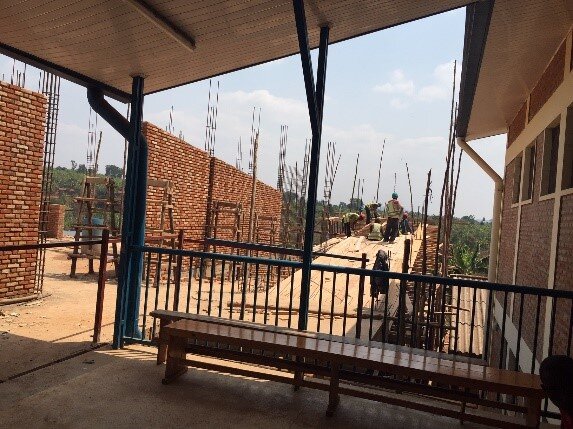
A visit to Kibuye Hospital was inspirational. The group learned how Busoma was made and had the opportunity to tour the hospital and see the community where all the missionaries live. A new pediatric wing is under construction.

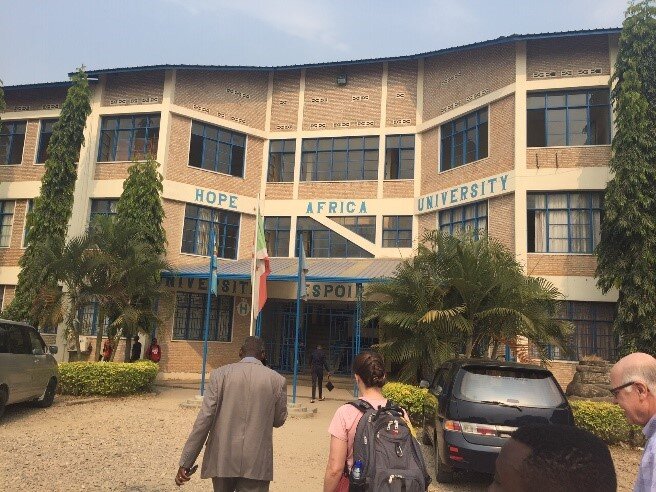
A visit was made to Hope Africa University to see how the solar power project funded by BMF was coming along.


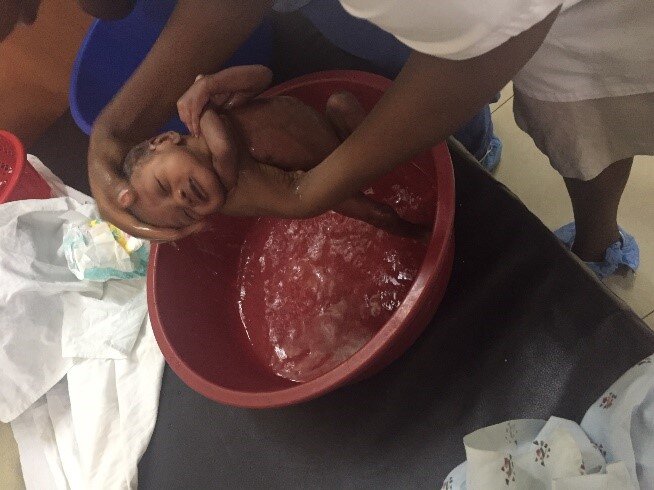
During our visit to the Van Norman Clinic in Bujumbura, we saw the ongoing need for expanded maternity services and the excellent training provided to the staff.

In January 2020, Hal Hoxie, President of BMF, and his wife, Kathy, along with Anita and Sarah Baird, traveled to India to participate in the dedication of the Eric Hostel at UMRI Hospital and participate in graduation at Immanuel University.

If you are aware of a non-profit, Christian healthcare organization that is in need of funding, just direct them to our website to complete a Letter of Inquiry at butterfieldfoundation.org.

Looking Back on 50 Years

By: Frank Ogden, M.D.

In 1970 I first arrived in Burundi to serve at Kibuye Hospital with my wife Maxine and 3 elementary school-age children. I was following several doctors who had served before me since 1946 when the hospital first opened, chiefly, Dr. Esther Kuhn, the founder, and Dr. Len Ensign. Others came for short periods. Ever since my freshman year at Seattle Pacific College (SPU) I had been preparing for this moment. That’s when God used a course in anatomy and physiology to confirm my call to missionary service.

What we found on arrival was a 42-bed hospital staffed by a handful of African nurses led by a Canadian nurse, Doris Moore. We had basic equipment with which to do medicine and surgery—a portable x-ray machine and a generator to power electric lights in the operating room. Kerosene lanterns were important for night duty in the wards. The water supply was usually good, though sometimes lacking. The pharmacy had basic medicines most of the time. We didn’t have fancy facilities and medicines; but God was with us, helping us meet the challenges.

I plugged right into building up services for the years ahead while doing my best to serve a population of 250,000. Since the road was only paved partway from the capital city of Bujumbura, our 100-mile journey to Kibuye was an all-day event, especially in rainy season. Nowadays it takes 2 ¼ hours.

Frank Ogden School of Medicine

Frank Ogden School of Medicine

Never could I have dreamed what was to transpire ½ century later, but here we are in 2020 and that small hospital with only one doctor most of the time has been transformed into a medical center with 229 beds and 18 doctors, half of them Africans. Also, there are 10 interns. Besides these, the hospital campus includes medical students and nurses in training in conjunction with the Frank Ogden School of Medicine, a division of Hope Africa University. Who could have imagined? The facilities’ expansion alone are amazing enough—two-story surgical ward, three-story pediatric building, two additional operating rooms, solar power, and an eye center, just to name a few. Recently Kibuye Hope Hospital has become a training facility for surgeons as part of the Pan-Africa Academy of Christian Surgeons (PAACS). We are so grateful for the team of Serge missionaries who have really developed Kibuye as the foremost Christian medical center of Burundi.

In the early days, there was no blood available so I had to devise a way to take it from a patient and store it until his operation 2 weeks later in order to give it back to him. Being the only surgeon I was quite busy caring for every kind of illness. Often people came from a far distance, even adjacent countries such as Tanzania and Congo. Epidemic typhus was a devastating epidemic. We had nearly 100% fatality rate until I learned that one 100 mg tablet of doxycycline would cure it. Pfizer Lab gave me the medicine for the clinical work and sent me to Czechoslovakia to present it at a medical conference. We have now eradicated typhus from Burundi. When I retired for the second time, finally hanging up my scalpel in early 2013, we left a one hundred thirty bed hospital as a referral center for 10 health centers. We knew that a team of young doctors was coming later that year to continue the work in the highlands of central Burundi. It was gratifying to me to help train the first class of medical students (from Hope Africa Univ) and attend their graduation in December 2012.

There were some setbacks in the progress to becoming the medical center it is today. A civil war came in 1972 that caused many of the hospital staff to be killed or flee. Then again in 1993, a second genocide caused chaos in the country and devastation to the hospital. Nevertheless, God continued to bless Kibuye through the troubled times, enabling faithful staff to offer healthcare and hope to many. Though I was absent for some years Dr. Dave Crandall, a general surgeon, began building the new hospital at Kibuye in 1973. When I returned three years later I completed the construction and appreciated working in this much larger facility with two operating rooms, maternity, wards, lab, and pharmacy. In 1990 I started the feeding program (Busoma) to prevent the malnutrition of children which has since grown into a major nutrition program with the help of Free Methodist International Childcare Ministry (ICCM) and other donors.

In 1993, while on home assignment in the US Maxine was found to have colon cancer. After a 3-year battle, the cancer recurred and I lost my wife of 39 years. In June 1997 the Lord gave me a new helpmate in order to continue working for Him in Central Africa. Carol Watson had been an evangelistic missionary of the Free Methodist Mission for 10 years in Rwanda prior to the genocide of that country. She had no trouble adapting to life in Burundi due to the similarities in language and culture. We served the hospital and the church full time until 2005 when I retired just short of age 70.

After that we went as volunteers, going for 3 months each year to help, often with the assistance of other short term doctors - especially Dr. Jerry Rusher and Dr. Patricia Rees. There were also three African doctors in residence. We built a 16-bed dormitory for medical students coming for clinical training, a new maternity, and a quadruplex for the expected arrival of the Serge Medical Team coming in 2014 with 6 new doctors. Thus, I could fully retire at age 78.

Now two of the graduates from our medical school have returned to serve at Kibuye after their specialty training in surgery and ophthalmology. Another graduate, a Ugandan, having trained in surgery in his home country, is now establishing a Christian hospital in his home area. We thank God for these first fruits of the new medical school.

It is very gratifying to look back on 50 years to see the phenomenal growth of Kibuye--- from a 42-bed, one-doctor mission hospital, to an important Christian medical center, Kibuye Hope Hospital (soon to be 300-beds) with multiple medical staff, including many specialists. All glory to God for His provision and protection for a half-century of service.

Experiencing Divine Compassion - A Response

By: Tim Kratzer, M.D.

A response to The Gifts of Healing by Pastor Colleen Dick from our December 2019 newsletter.

Pastor Colleen Dick’s sermon got me to thinking. What has divine compassion looked like in my own life and how can I experience and offer that compassion, me with my limited resources and weak faith? So again, what does this divine compassion look like? When I see the hungry I offer food. When I see the thirsty I give water. When I visit the sick I offer hope for a cure. When I encounter the stranger I invite him in. When I see the naked I give covering. What is my resource for these ministries of compassion? How can I offer hope when I see no hope?

My resources are never sufficient, but I am blessed. Peter and John at the temple had no money to offer the cripple, but they offered what they had. They had faith that in the name of Jesus he could rise up and walk. What is the motivation? In the name of Jesus…does the world know about Jesus? Sadly the majority of God’s created ones go on as if they will live forever. Those who are well supplied live as if they can take care of themselves, even to the point of not caring about their eternal souls. They are occupied with collecting riches here on earth, not thinking about their life beyond. Those who are impoverished or embattled are so beaten down that they see no hope. But I have encountered the Divine and know that there is life beyond, that there is hope. I am changed as divine compassion, the very Spirit of God, changes me and flows from me?

Divine compassion has stepped into my life and gives me power over sin and death. I say, “Yes”, to God, and the Spirit of God changes me in ways I could not imagine. What did the Holy Spirit do in the life of the early church? Those who were taught that they had to fulfill the law, were freed from the condemnation they had experienced under the law. Those who were serving the gods of their own creation, found the God who had created them and their world. Slaves were set free. The sick were healed. Sight was given to the blind. Hope was given to a world that was ruled by earthly, self- serving powers.

What is the Holy Spirit empowering me to do in today’s world? How can I experience divine compassion? I recall the question I began with, how can I experience and offer divine compassion, me with my limited resources and weak faith? I have eyes to see, keep them open. I have ears to hear, listen to the world around. I have a heart created to experience the Divine, feel with those who are seeking for meaning in the confusion of this broken world. Consider the many ways in which I have been blessed, share those blessings with others. Give witness to God’s transforming presence in my life, and thereby share that power which makes miracles possible. Divine compassion is Spirit directed, knowing no limits. Divine compassion is transforming, enabling me to live knowing that what I see now is but the beginning of life everlasting. Divine compassion gives me hope, even as I experience the weakness of my flesh. It suffers with those in need, but not without hope.

What is my hope?

“So you see, just as death came into the world through a man, now the resurrection from the dead has begun through another man. Just as everyone dies because we all belong to Adam, everyone who belongs to Christ will be given new life.” (I Cor 15:21-22)

What a blessing to know that in the journey we call life I have experienced divine compassion, and in experiencing divine compassion I have been introduced to the author of eternal life. As I am infilled and empowered by the very presence of God, the Holy Spirit, I am indeed experiencing and offering divine compassion. I belong to God and his power is present in all that I am and all that I do.

I am drawn back to Paul’s words of instruction in I Cor 15:3-4.

“I passed on to you what was most important and what had also been passed on to me. Christ died for our sins, just as the Scriptures said. He was buried, and he was raised from the dead on the third day.”

Then Paul goes on to give his testimony of God at work in his life.

“But whatever I am now, it is all because God poured out his special favor on me-and not without results. For I have worked harder than any of the other apostles; yet it was not I but God who was working through me by his grace.” (I Cor 15:10)

So I come back to Pastor Dick’s sermon on the “Gifts of Healing” and the question, “Divine compassion. Have you ever experienced divine compassion? Divine meaning ‘of or belonging to God’ or ‘proceeding from God.’ ” I would suggest that the compassion that arises from within me is of the Holy Spirit and gives witness to the power of God which has power over sin and death. What a blessing is mine to live in that spirit-filled reality. Thank you Pastor Dick for reminding me that God is at work demonstrating divine compassion in today’s world.